1. How can we explain the continued interest in a particular work in different contexts and at different times?
The different events in human history, create what we are nowadays. All the events that have passed have importance in the result of what human are or in the society in which we live. We know what have passed because we read our history in books, but also by reading novels, we can understand or learn more about the historical events of different times, highlighting the social context in which novels are written, and the stories takes place. This is the reason why people is interested in works (novels in this case) that are in different context and at different times, and also its important to highlight that people its always going to be interested in know why we are now how we are, in other words, the reasons that molded a society in what its nowadays.
I can show 2 different examples about novels of different times ('30 - '40) that people still read them, because those novels represent a very interesting element in human history, and as I said before, because those events, we live how we live nowadays, maybe with no discrimination, in peace, etc.
The first novel is 'To kill a mockingbird' of Harper Lee published in 1960. The story is about what the author lived during her childhood, but he represent his childhood, by using different characters. The story takes place in a unreal town called Maycomb, Alabama. The important element of this novel is the historical context in which the history is narrated. 1930' were very difficult days in EEUU because of the Great Depression that take place in 1929. Also the society was very racist (especially people from Alabama) so black people was discriminated, something that nowadays we consider stupid and reprehensible. Some of the main events of the story is Tom Robinson's trial, in which a white man, called Atticus Finch defended a black man (Robinson). Atticus was very criticized by people, because they didn't accept that a white man was in the side of a black man. Nowadays when we read this it may be considered like something with no reason, but racism was something that characterized those times, and was considered like something maybe logic and normal, very different with our reality.
The other novel is 'Fatelessness' by Imre Kertesz published in 1975. This novel also is autobiographical, because the author wrote his own experiences by creating a character, in this case, called Georg Koves, who was send to Auschwitz and Buchenwald (concentration camps), and the novel narrates the experience of this 14 years old boy in this dreadful places. The story takes place during the Holocaust, that was the persecution of the jewish people in Europe during the Second World War. The things that Germans did in the concentration camps are consider one of the worst acts of humanity in humans history. Thousand of jewish people die during the 6 years of war, in this concentration camps, as in the novel are described, were like being in the hell, with hard working routines, poor diet (no food), bad conditions (illness), etc. And the sensation, that in any moment you can be send to a gas camera to die suffocated. This is also a very important moment in human history, as I said, one of the worst of humanity.
The thing is that this events, make people reflect and thing 'why we are doing this?', 'It's good what we are doing?' and many questions that open peoples mind and make them understand that humans can be like that, so its important to don't repeat this act and learn about them, and that the reason, again, of what nowadays we don't see people chasing jewish or discriminating someone because this color of the skin. Because of the reflection and the change is why nowadays, in many cases, peace is something that is around us.
In conclusion, this novels are an important piece of human history, because they are contextualized in important events of human life, such us the Great Depression (and racism society) and the Holocaust in the Second World War. 2 different event that doesn't make us feel proud of what we have make us human to our brothers, but because of those 2 events, nowadays we doesn't repeat the same mistakes that we have make in the past. So, that's the reason of why people still read those novel that are contextualized 70-80 years ago, because those text represent and important moment of human history that its always important to take in consideration, and know about them.
domingo, 27 de abril de 2014

lunes, 24 de marzo de 2014
Abraham Lincoln Speech
In this speech Lincoln chose very interesting words, that makes feel the reader, like a friend or someone very close to him. First of all it refers to the receptor as 'My friends'. By refering to someone as a friend, you immediatly show certain relation to him, so, Abraham Lincoln is trying to be close to everybody that is listening to his speech. Also he said 'here I have lived a quarter of century', this also reinforce the intent of being close to the people, in a way trying to say, I'm one of yours, I'm from here as you. All these are persuative skills used very well by Linconl.
Register
How would you describe the register of the following statements?
- “Honoured guests, members of the board, Superintendent Johnson, and most importantly, graduates of the class of 2012, it is an honour to speak to you on this ocassion.” Formal
- “While I was pleasantly surprised by the menu selections for dinner service, I was disheartened by the lukewarm eggs at breakfast.” Formal
- “Yeah, right” Casual
- “I doubt it” Consultative
- “I’m tired of your rubbish” Intimate
- “I’m tired” Consultative
Idioms and Ambiguity
Meaning can often be complicated through the use of metaphors, idioms, or simply through ambiguous relationships between words. What are the actual meanings of the first two idioms below? What are the possible meanings of the next ambiguous sentences?
- Bite your tongue: literally bite someone / shut up.
- Pull my leg: my leg / play a joke to someone.
- He is my English teacher: he is my english teacher/someone may thing, that he come from England (ambiguity) /He correct everything about English.
- I saw the person with a telescope: you saw someone with a telescope or you use the telescope to saw someone.
- She doesn’t like short men or women: Ambiguity, she doesn't like short men or women. Or the other meaning that she doesn't like short men or all women.

Truth assumptions
Truth Assumptions
Are the following statements factive or non-factive?
- I thought that today was your birthday. Non-factive
- I forgot that today was your birthday. Factive
- The teacher scolded me for not studying hard enough. Factive
- The teacher acknowledged that I hadn’t really studied. Factive
- The teacher realized the student had cheated. Factive
- The teacher assumed that the student had cheated. Non-factive
viernes, 6 de diciembre de 2013
The Kraken by Alfred Lord Tennyson
The Kraken
Below the thunders of the upper deep,
Far far beneath in the abysmal sea,
His ancient, dreamless, uninvaded sleep
The Kraken sleepeth: faintest sunlights flee
About his shadowy sides: above him swell
Huge sponges of millennial growth and height;
And far away into the sickly light,
From many a wondrous grot and secret cell
Unnumbered and enormous polypi
Winnow with giant fins the slumbering green.
There hath he lain for ages and will lie
Battening upon huge seaworms in his sleep,
Until the latter fire shall heat the deep;
Then once by men and angels to be seen,
In roaring he shall rise and on the surface die

 S: The tone is the same during the whole poem, by a constant use of imagery.
Below the thunders of the upper deep,
Far far beneath in the abysmal sea,
His ancient, dreamless, uninvaded sleep
The Kraken sleepeth: faintest sunlights flee
About his shadowy sides: above him swell
Huge sponges of millennial growth and height;
And far away into the sickly light,
From many a wondrous grot and secret cell
Unnumbered and enormous polypi
Winnow with giant fins the slumbering green.
There hath he lain for ages and will lie
Battening upon huge seaworms in his sleep,
Until the latter fire shall heat the deep;
Then once by men and angels to be seen,
In roaring he shall rise and on the surface die
T: I think that the title refers to the monster of the sea that I have seen in some movies.
P: It tells us about the Kraken: characteristics, how does it lives very deep under the sea, that the monster is alone.
C: By the figurative language we can say that the Kraken is alone and is considered by the people as something bad, like a monster. Its very literal in the description of the Kraken, describing his characteristics and his 'routine'. In the poem they are some literary devices such as metaphors, like the one that is in the first verse.
A: Mysterious, is like telling the legend of a ancient creature that live very deep in the see, were no one else can go, so no one really knows about this creature (except the speaker) so its a very mysterious theme.
S: The tone is the same during the whole poem, by a constant use of imagery.
T: The title is very literal, I mean, the poem is about the Kraken.
T: As I said before, the poem is about the mysterious creature called Kraken and the characteristics of this creature.
lunes, 2 de diciembre de 2013
Activity 8.6 page 206
Extract 1
1) It use the word 'as' to compare (simile) 'stedfast as thou art'.

2) The star is something figurative, maybe it refers to something that its far away and he want to have it.
3) He wants something and he is constantly watching what he wants.
Extract 2
1) Simile: 'as men strive for right' and 'as they turn from praise'.
2) The literal term is love.
3) In the 2 similies its expressed the way he loves her.
Extract 3
1) There are some metaphors, for example: 'Grave men'.
2) The literal term is that the grave men are near to death.
3) To be calm during bad moments.
Extract 4
1) Metaphor: 'I have spread my dreams under your feet'.
2) He might be dreaming with her.
3) Love. He would do everything to make her feel confortable.
Extract 5
1) 'Beauty is a fat black woman'. (metaphor).
2) It refers figuratively to the beauty of a black woman who is walking in the fields.
3) She might enjoy the life, whatever she looks like, because how we look physically isn't the most important, people is worth by what they have inside.
Activity 8.6 page 205

1) The 'I' it refers to a pregnant woman.
2) The fact that the author use metaphors to refers to a pregnant woman, it makes us think about on what she wants to said, and also it grabs our attention. In other way it also help us to grow up our knowledge and comprehension.
Activity 8.5 part 2 Discussions questions
1) In the poem, it describes the beauty of the woman, by the perspective of the author. I think that the real message in this poem is that the beauty of the people is inside, because sincerly, the fat woman have no attractive, but the author gives another perspective of what is attractive or not (as I said before, the inside beauty).
 2) The poem itself is a critic to the society in which we live, because we are very superficial and we take care of thinks that maybe are not important such us the physical aspects.
3) The rhyme scheme is like the sea because during the poem it flows, and its constant such as the sea. It gaves the impression of calm.
domingo, 1 de diciembre de 2013
Activity 8.5 Poem Beauty

Sound: sea (waves), field.
Taste: the salt from the sea.
Touch: hibiscus, waves, the fields.
Smell: the sea, and smell of the fields.
Activity page 203

1)The metaphors used in the poem are very interesting, the same as the theme of the poem (the metaphors are very deep). Also I liked that the poem itself it´s very descriptive.
2)The contradiction between the message that the author wants to give by his poem, and the poor rhyme and the repetition of words in the poem, that makes its kind a boring to read it.
3)What was your motivation to write this poem?/ Why did you write a poem without a good rhyme and with a lot of repetition of words?/ Do you think is something would you like to change in this poem?
miércoles, 11 de septiembre de 2013
Written Task
Dear Bessie,
I',m writing you from my new home, here at Thornfield. Just few day ago I met the owner of the house, Mr. Rochester. He is single and have this big house full of people working on it and a girl that she adopted called Adele (the one I have to teach). Also I feel that Mr. Rochester is kind a mysterious in this way of acting, I mean, all here is very spooky, I listen things at night that scary me and some things or people are very strange.
Maybe I exaggerated the situation, but I prefer to be aware of any strange things that disturbs the normal life that I have finally reached, away from the past. Yes Bessie, my life experiences have affected my in considerable way, and nowadays I have be thinking about it. You might think why I didn't tell you this when we met at Lowood School, but I don't have a clear reason to response to that question, I only now that now I feel comfortable to write you about it.
From the beginning my life started wrongly, I mean, my fathers die and I was send to the Reed's family. Being in that family, I can say, is the worst thing that have happened in my life, I'm simply not compatible to the Reed's and they might think the same about me. In that house the only person that was good and kindly with me was you Bessie and also Mr. Reed in his moment, but the rest, they were a group of abusers that feel superior to the rest of the people that were at the house (including me, of course). The thing is that they agree to make my stay at Gateshead a terrible experience, and believe, they reach their objective. As I tell to Mrs. Reed once, I'm glad that they are no relation of mine. The only thing that I never turned, was to make public the miserable cruelty to which I was subjected at Gateshead.
Later I leave Gateshead, to start a new life at Lowood School for girls, in which I thought it will be a good experience, but the time will show me that my thoughts were completely wrong. At Lowood School I learned what is the hard life and I also met bad people that make me the life as terrible as at Gateshead. Time at Lowood was eternal, and the routine was something that upset me physically and psychologically. The only thing that I rescue from my experience at Lowood is that I met two incredibly persons: Miss Temple and Helen. The first one is like you Bessie, a role mole of my childhood, one of the only kindly persons, that I met when I was a child (including you also).
Now, as I told you at the
beginning, I’m at Thornfield, with the objective to be a role model to Adele,
as you and Miss Temple were my role model during my childhood. Going back to
what I told you first, I feel that strange things are taking place here at Thornfield.
For example, few days ago, when I met Mr. Rochester, I was at the street and I
saw a dark shape of a horse walking to me, and I immediately thought that it
was a Gytrash. Yes Bessie, a Gytrash, those spirits from your stories that
frighten belated travelers. Hopefully it was Mr. Rochester in his horse. But
the fact is that the atmosphere in the street or in the house is very
mysterious, I mean, the fog is always present, and darkness combined with this
strange sounds that are inside the house. Is like something has this place,
something that I can understand or I haven’t seen it.
I insist that maybe I’m exaggerating
all this situations. Maybe I need more time to adapt myself to this new home
that I have, because leaving is not an option for me. Any little sound or
strange moment are better than what I have leaved at Gateshead or Lowood
School, believe me. And another reason that attracts me to this place is that I
think that Mr. Rochester is very handsome, and it’s important that as I said
before, he is single! But I have to be realistic, I’m not a kind of women that
Mr. Rochester will take in consideration, he might be looking to some rich girl
from a novel English family to get marry. I have to assume it, that is what our
society establishes, and it’s very difficult to change how things are
established by the society. It’s sad, but it the reality in which we lived.
Well Bessie, that’s all that I
have to tell you in this moment, but I promises you that I will write you again
as soon as I have new things to tell you. For now I will continue with my job
of teaching to Adele and also I will try to know more about the owner of this big
house, and I will try to above all these strange aspects that I tell you
before.
Sincerely
Jane Eyre.
RATIONALE
I decided to write a letter in which Jane Eyre tell her feelings and impressions
about her new life at Thornfield, because I thing that a letter is something
more personal and type of text that let express the feelings in a better way,
because we suppose that the people involved in the letter have a closer relationship. Also during the
letter I put a very important element: Jane’s childhood, in which Jane describe
the awful life that she lives during her stay at Gateshead and Lowood School
for Girls. Another important thing is the mention of the mysterious atmosphere
that it’s presented in the history.
The audience is adults or young people I think, because this is a very complex
novel of the Victorians times , so for children it might be difficult to
understand.
About the
language, I used a formal language,
trying to represent the language that Jane might used in the case she wrote a
letter to Bessie. Formal language, because in the Victorians times the way they
write was very formal, without jargon or informal expressions that are very
common nowadays.
In summary the idea was to represent a letter of the Victorians times,
wrote by a girl (Jane Eyre) in which she released all what she is feeling and
what she have lived.
domingo, 1 de septiembre de 2013
Reflection and Chapters 5-6-7-8
The video shows how students were punished at school during the Victorian times. This teaching methods aren´t accepted nowadays, because, as I said in another entry, the laws nowadays are very strict about how to treat boys in the school, and also in the house (not physical punishment it's allow).
Questions
- Imagine that you are falsely accused of stealing someone’s wallet at school. Your accuser is a credible witness, believed by your peers. Do you insist on your innocence and try to prove it? Do you confront your accuser? How do you live with the disapproval of your peers? Is the knowledge of your innocence enough to sustain you? Write a reflection statement referring to these questions.
- What is your opinion of Mr Brocklehurst’s philosophy of education?
- Compare Jane Eyre to other mistreated heroines from children’s stories (Cinderella, Rapunzel, Snow White). Knowing that Jane Eyre is the novel that broke many rules about how a mistreated heroine should act, compare and contrast them to Jane.
Answers

1) Obviously I will insist on my innocence and I will try to prove it by any way. I mean, I will don´t assume something that I haven´t done (it's something logic I think).
2) I don't accept that philosophy of education. For those times, maybe it was acceptable, but nowadays I think that many people will agree with me and thing that Mr. Brocklehurst philosophy of education is barbarism.
3) The main difference is that Jane Eyre it's alone with her problems compared with the others heroins that they have some 'magic help'.
Film adaptation and Question Chapters 3-4-5
- What liberties do you think the director took in adapting the novel into a film?
- What criticisms can you offer to the portrayal of Victorian Times presented in the film?
- In a contemporary context, how would society manage the constant abuse and bullying against a child within the heart of his/her family?
ANSWERS:
1) The director can interpretate the novel as he want's, so in the film adaptation she might put the elements that he thinks that are importante, maybe missing some elements that appear on the book, or presenting them in a different way.
2) Criticisms to the social structure of the Victorian times. Also directed to the authoritarianism of the time (abuse from the Reed's to Jane).
3) Laws are very strict about bullying in families or schools, so those atittudes aren´t accepted nowadays.
CHAPTER 3-4-5

1. How would you describe the relationship between Jane and Mr Lloyd? How do you think this affects her?
Mr. LLoyd is very kind with Jane Eyre, and it's very important to her because her life at Gateshead is very difficult (Reeds bullying).
2. How did Jane’s character changed in her confrontation with both Mr Brocklehurst and Mrs Reed?
She gets very angry about what Mrs. Reed said, and she responses later with a very interesting phrase that meets all the things that she have to resist in her time at Gateshead (many years).
3. What is your first perception of Lowood School? What do you predict for Jane’s future at Lowood?
My first perception was that Jane was going to have a good time at Lowood School, but later I realize that this it's completly contrary.
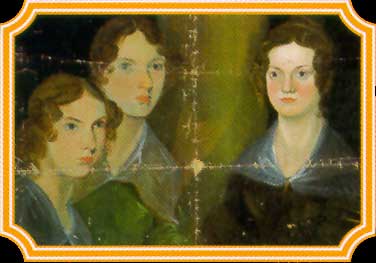
In search of the Brontes
1. Who is said to have influenced the sister’s lives and WHY?
The father. He wanted that her girls became writters, so since they were young, he shaped her minds.
2. What tragedy struck the Brönte family?
Mother death, and later the sister also death and the fathe have to live with the sadness.
 3. What’s the Brönte father’s background?
The father studied at Cambrige. His family had a very good economic situation.
4. How is it said that Emily Brönte coped with homesickness?
She expressed all her emotions in her poems.
5. What is Haworth described like in the times the Bröntes lived there?
In those times, was taking place the Industrial Revolution, and also the biuldings were usually gothics.
6. What is a recurrent theme in Charlotte’s writing (based on her experience as a child)?
The death of her mother and the problems before.
7. How did the Brönte father try to salvage the situation with his family after his wife’s death?
He try to find another wife (he married 3 times), to find a woman role model to her 3 daughters.
Image analysis: Charlotte Brönte's Landscape

 The images shows the scenery that surrounded the Bronte family: Yorkshire Landscape. The big lonely fields gives us the impresion of a sad, gloomy or dark atmosphere. Also in the images, they show some churches and graves, that reinforces the idea that I just said. Now that I have read some chapters of the book, I can said that the tone or atmosphere presented in Jane Eyre, is kind a similar to the tone of the novel: dark, sad, etc.
miércoles, 26 de junio de 2013
CAN WE TRUST IN MEDIA?
CAN WE TRUST IN MEDIA?
By Matías Weitz
By Matías Weitz
Nowadays
we live in a globalized world, in which media have an important role in human’s
life. Media have an incredible power and influence in humans, and we have to
take care about this. I mean, we believe all what media tell us, but we don`t
take care about something very important: media is controlled by people, and we
don`t know the intentions that this people have. This is very important because
sometimes the information can be modified, showing us something that isn`t real,
or in other cases, media create an image of certain groups by stereotyping
those groups of people. From this, I make a simple question: can we trust in
media?

Other example is what happened in Chile some years ago. CHV (TV channel) showed
a report in which a woman talk bad things about the maids, saying in other
words that maids are ‘less important’ or a lower social class. The problem was
that CHV only showed some fragments of the whole interview, cutting the
important parts of the interview. Later CHV transmit the whole interview, and I
get surprised because in the complete interview, Ines Perez Concha (the woman)
defended the maids, trying to transmit to people that watch CHV, the problem
that maids of her neighborhood had. Here the media controls the information
that they had, showing us a fake reality of the opinion of this woman, making,
in this case, a huge damage of her reputation or image.
Concluding, I will to make a call to all the readers of this great blog: go
deeper in what media tell us, and don’t believe in all what you see on the TV,
Internet, etc. We don`t know who is behind the redaction of the different
information that media present us, so we don’t know the intentions that media
have. Us we see in the 2 examples that I have, we believe in what media tells
us, but sometimes we must not believe to much, because of the intentions
that it have: convince us of something that isn`t truth (11/09 fake attack and
Ines Perez Concha case). Also stereotypes that we have in our mind, have been
molded by media, by all the advertisement and different situations that it
present, in which they characterize a group of people.
Finally I will like to share a quote that y take from an image: ‘relax… your
friendly media conglomerate will decide what you need to know’. A clear quote
that reinforces what I’m trying to explain to you, that media have the power to
make us believe what they said, and we trust in it, and we don’t take in
consideration that they manage what we must know; in other words, media have
the control of people, and we must be careful about this.
Rationale
I decided to do an opinion column, to present in a better
way a theme that affect us. As the column said, media is an important element in
our daily life, and during the time passes it have acquire more power and
influence in humans. So presenting a formal opinion about a topic that affects
us, describing the point of view of someone that is affected by this, it helps
to attract the audience, convincing them, or making them is aware about this
topic.
The audience of this text are the readers of my blog, in
which they can appreciate my personal opinion, based on my experience of this
topic.
By relating the personal experience of a person (in this
case, me), it makes more convincing what the text is trying to tell us. As I
said, it creates a conscience in people who read this, making them thing if
they can trust in media or not. Also, presenting examples of real life, such us
the 11/09 terrorist attack or CHV case makes it more reliable, showing this
cases of how media can modify or adapt what we have to know, or in another way,
what media decide that we have to know.
In this opinion column are presented the stereotypes, making
reference to something that affect, because media have created some
classification about certain groups.
The objective of this task, was to create conscious about
this topic, based in this call to the society, by this opinion column, to be
aware about how unreliable can be media, which has control over us.
Text: 879 Words
Rationale: 264 Words
Suscribirse a:
Entradas (Atom)